Third-party storage or renting a warehouse: a comparison for Brescia businesses
Third-party storage or renting a warehouse in Brescia: fixed costs, staff, flexibility and ERP integration compared to help you choose the right option.
When space for goods runs out, a company in the province of Brescia faces two routes: rent its own warehouse and run it with in-house staff, or hand storage over to a third-party storage provider in Brescia. Both models solve the same problem, a lack of space, but with very different logic on costs, staff and flexibility. This article compares the two options point by point, to help work out which one fits a given business situation.
Third-party storage or renting a warehouse: what each option means
Renting a warehouse is the traditional approach: a company leases a building, fits it out with its own racking and equipment, hires or trains warehouse staff, and manages receipt, storage, order preparation and shipping internally. Control is direct and complete, but so are the costs and the day-to-day operational responsibility.
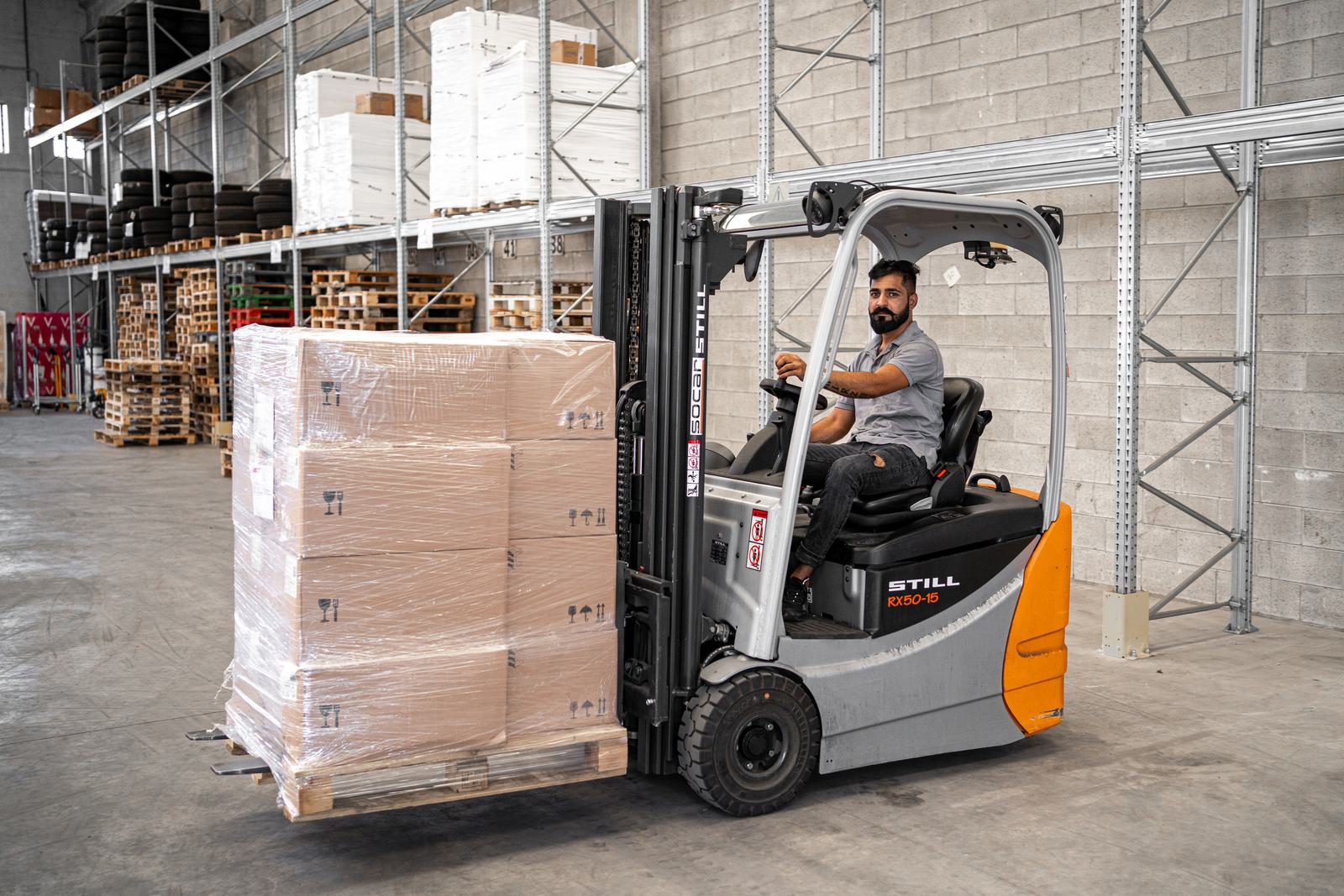
Third-party storage works differently: a logistics operator such as Ital Log provides its own premises, staff and equipment to manage goods for several client companies. A business that outsources pays for a service scaled to its actual volumes and keeps commercial control over its goods, without having to run the day-to-day management of the space itself.
Fixed costs and upfront investment
Renting a warehouse requires a financial commitment set in advance, independent of actual volumes: the lease, racking, forklifts and pallet trucks, security systems, utilities. These costs stay fixed even in quieter months, and a sizing mistake made at the start, too much space or too little, is paid for over the entire length of the lease.
With third-party storage there is no investment in the building: the company pays according to the space and services actually used. This difference matters most for small and medium-sized businesses in the province of Brescia that would rather not tie up capital before volumes are confirmed.
Staff and day-to-day management
Running a rented warehouse also means managing people: hiring warehouse operators, training them on safety and procedures, covering for sickness or turnover, organising shifts during peak periods. It is an organisational load on top of the company's core business.
With third-party storage, staff and shifts are the logistics operator's responsibility. The client company does not have to worry about recruiting or training warehouse staff: it receives a service with defined levels, leaving the day-to-day organisation of receipt, goods handling and order preparation to whoever runs the facility.
Flexibility on volumes and seasonality
A rented warehouse has a fixed capacity, set when the lease is signed. If volumes grow, the company needs to find more space, often after a long search. If volumes fall, the extra space becomes a cost with no return. For companies with seasonal peaks, from Franciacorta to the Bassa Bresciana, this almost always means sizing the facility for the busiest months of the year.
Third-party storage absorbs changes in volume without the company having to change premises: the space used scales up during peak periods and contracts again in quieter months, with no lease to renegotiate.
ERP integration and distribution
A rented warehouse requires the company to develop, or have developed, its own stock management systems and their integration with its ERP. That is a technical investment on top of the one in the building itself.
With third-party storage such as the one offered by Ital Log, on request, order and stock data can be integrated with the client's ERP, together with shipment tracking and reporting. Distribution of stored goods connects directly to the company's pallet transport services across Italy and Europe, without having to coordinate warehousing and transport separately.
Third-party storage or renting a warehouse: the comparison table
| Aspect | Renting a warehouse | Third-party storage |
|---|---|---|
| Fixed costs | Lease, racking, equipment | No investment in premises |
| Staff | To hire, train and manage | Managed by the logistics operator |
| Flexibility on volumes | Fixed capacity, needs renegotiating | Adapts to seasonal peaks |
| ERP integration | To build in-house | Available on request |
| Growth | Needs new space and takes time | Scales with volumes, no new lease |
Who benefits from each option
Renting a warehouse makes sense for companies with stable, predictable volumes that want direct control over every stage and already have trained staff and capital to invest in the premises. It is a consistent choice when warehouse management is part of the company's core business.
Third-party storage, on the other hand, suits growing companies, those with variable or seasonal volumes, or ones that would rather focus internal resources on their own business than on managing warehouse space and staff. For a broader look at the concrete signals that it is the right time to outsource, see third-party warehousing in Brescia: when it pays off.
Frequently asked questions
Does third-party storage cost more than renting a warehouse?
It depends on volumes. Renting a warehouse carries fixed costs independent of actual use, while third-party storage is scaled to the space and services actually used: for variable or seasonal volumes it is often the more efficient option.
Can a company move from a rented warehouse to third-party storage?
Yes. Many companies in the province of Brescia make this move when the lease expires or when fixed costs become disproportionate to actual volumes. The switch needs the goods transfer to be planned carefully.
Can third-party storage be integrated with our own ERP?
Yes, on request. Ital Log offers data integration for orders and stock, shipment tracking and reporting, so the company keeps visibility over its flows even without managing the space directly.
What happens to distribution of goods stored with a third party?
It connects directly to the company's pallet transport services, with the Non Stop 24h, Standard 48h and International service levels, to all of Italy and the main European countries.
Does third-party storage work for small volumes too?
Yes. Unlike renting a warehouse, which requires a minimum space commitment regardless of volume, third-party storage also suits limited or seasonal storage needs.
Request a comparison for your warehouse
If your company is based in Brescia or its province and you are weighing whether to rent your own warehouse or use third-party storage, we are available to review your volumes, seasonality and growth plans and propose the most suitable solution. You can request a quote online, write to info@italog.eu or call +39 030 8860285. Our operating site is at Via Francesco Castagna 7, Brescia.