Software integration between your ERP and the warehouse: what to ask a 3PL
How 3PL software integration works: which data can be exchanged, questions to ask, advantages and limits for businesses working with Ital Log.
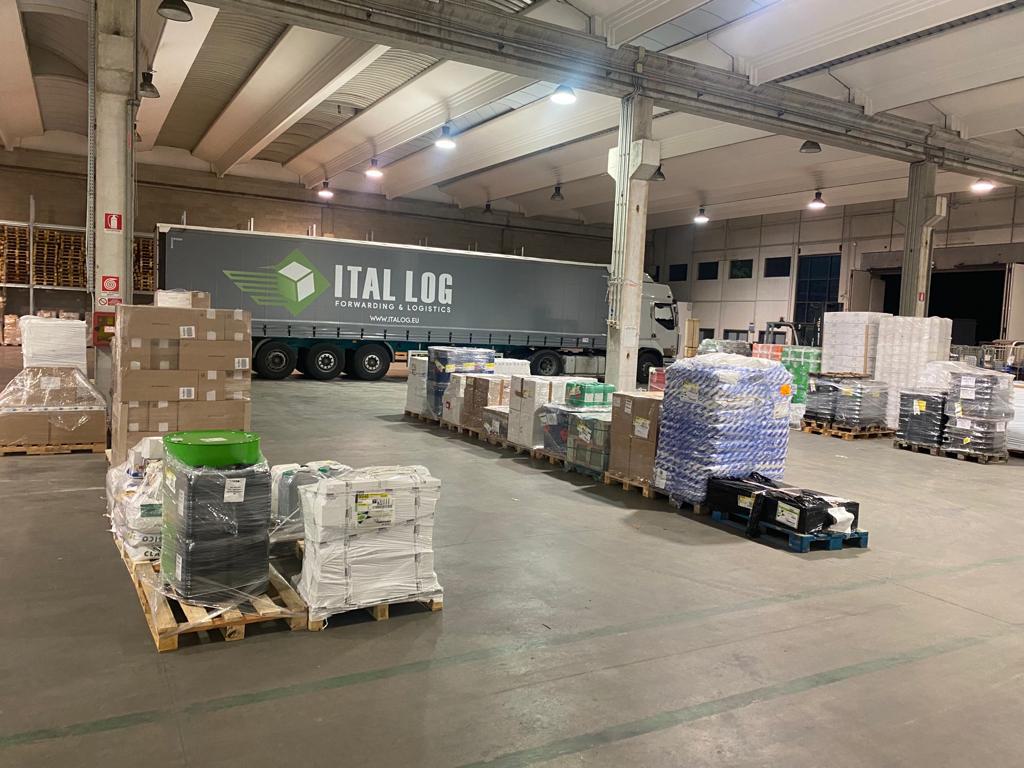
When a company hands its warehouse over to an outside operator, the first question is usually about data: how to know, at any moment, what has come in, what has gone out and what is left in stock. The answer is 3PL software integration, meaning the link between the company's own ERP and the systems used by the partner that handles storage. It is not a compulsory step, but for many businesses it is what makes outsourcing the warehouse genuinely useful, not just convenient. This article looks at what it means in practice, which data can be exchanged, and above all which questions to ask a 3PL before starting the service.
What integration between your ERP and the warehouse means
3PL software integration means the automatic, or semi automatic, exchange of information between a company's ERP and the systems used by the warehouse operator to record inbound and outbound movements and stock levels. Without integration, the company has to request manual updates, by email or phone, every time it wants to know the status of stock or an order being prepared. With integration, some or all of that information reaches the company's own systems directly.
Ital Log offers data integration on request for customers using its third-party warehousing in Brescia: exchange of order and stock information, shipment tracking and reporting. This is not a standard software product bought separately, but an activity defined together with the customer based on the ERP already in use and the specific needs involved.
Which data can be exchanged with a 3PL
In a third-party logistics service, the most useful data flows typically cover:
- incoming orders, so the warehouse knows what to prepare and in what order of priority;
- updated stock levels, to avoid stock-outs or selling items that are already out of stock;
- shipment status, linked to tracking on the Pall-Ex Italia network;
- reporting data, useful for analysing volumes, fulfilment times and seasonal patterns.
The level of detail and update frequency depend on the project: some companies need a simple daily summary, others need more frequent exchanges because they also sell online or manage several channels at once. This is why data integration with the customer's ERP is offered on request rather than as one fixed scheme for everyone.
What to ask a logistics operator before integrating systems
Before starting a 3PL software integration project, it is worth clarifying a few operational points, not only technical ones.
Which data is exchanged and how often
Not every project needs the same level of detail. It matters whether stock updates happen in real time, several times a day or once daily, and whether that frequency fits how the company manages sales and production.
How the setup phase is handled
Connecting two different systems requires an initial setup phase, in which the data to be exchanged and the format it is sent in are defined. Asking how long this phase takes avoids surprises about the actual start date of the service.
What happens in case of mismatches
It helps to know how a discrepancy between actual stock and system stock is flagged, and who deals with it: a single point of contact, as Ital Log offers to businesses in the province of Brescia, makes this part much simpler.
How integration connects to distribution
Data integration does not only cover storage, but also the following stage of goods distribution: shipment tracking, delivery confirmations and transit time reporting are all part of the same information flow.
Advantages and limits of data integration
| Aspect | Without integration | With 3PL software integration |
|---|---|---|
| Stock updates | Manual request, variable timing | Data exchange with the warehouse, on request |
| Order visibility | Only through direct contact | Flow agreed with the 3PL |
| Shipment tracking | Checked on the network's own portal | Can be built into company information flows |
| Reporting | Rebuilt manually | Available on request from the operator |
| Initial complexity | None | Requires a shared setup phase |
Integration brings visibility and cuts down manual work, but it is not a switch to flip without preparation: it requires clearly defining what should be exchanged and which ERP the company actually works with today. For that reason it is a decision to discuss case by case, not a standard service identical for every customer.
Frequently asked questions
Is ERP integration included in every warehousing service?
No, it is offered on request. Ital Log assesses it together with the customer based on the ERP in use and the data that is actually needed: orders, stock levels, tracking or reporting.
Does integration require particular software?
There is no single standard that fits every company. The project is built starting from the ERP the customer already uses, defining together which information to exchange and how often.
Does integration also cover pallet transport and not just the warehouse?
Yes. Shipment status and tracking on the Pall-Ex Italia network can be part of the same data flow shared with the customer's ERP, alongside warehouse information.
How long does setting up a data integration take?
It depends on the complexity of the project and the system already in use at the company. The quickest way to get an estimate is to describe your current situation when making a request and receive a tailored indication.
Is it worth it for companies that already outsource warehousing without integration?
Often yes, especially if manually handling updates has become a bottleneck. Customers already using third-party warehousing can consider integration as a next step, without changing operator.
Ask about data integration
If your company is considering connecting its own ERP to the systems of a logistics operator in Brescia, we are available to review the current situation and work out which data would be useful to exchange. You can request a quote online, write to info@itallog.it or call +39 030 8860285. Our operational site is at Via Francesco Castagna 7, Brescia.