How to prepare a pallet for shipping: packaging, height and weight
How to prepare a pallet for shipping: a stable base, stretch film, corner protection and documents, for EPAL 120x80 and 120x100 formats.
Knowing how to pack a pallet for shipping is a practical concern for any business in the province of Brescia that hands goods over to a carrier: a poorly built pallet risks damage in transit, slows down loading and unloading, and can lead to disputes on delivery. Proper preparation reduces risk, speeds up handling in the warehouse and helps secure an accurate quote from the first request.
Why pallet preparation matters before shipping
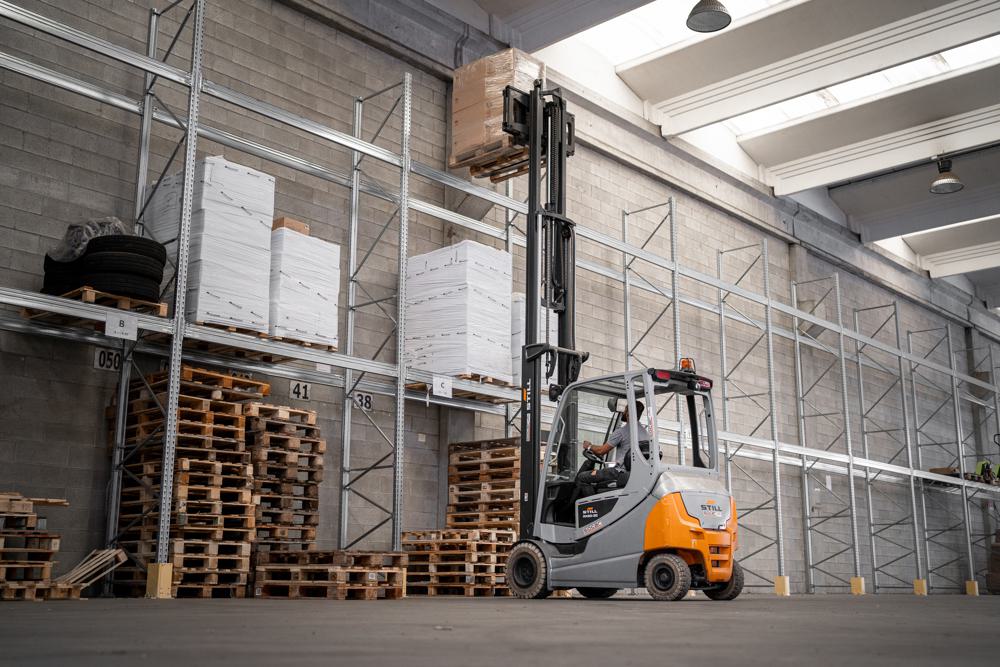
During pallet transport, a load is handled several times: at collection, at the network's sorting hub and on delivery. Each stage involves loading and unloading with forklifts or pallet trucks, waiting periods before routing and, on multi-leg journeys, transfer from one vehicle to another. A well-built pallet keeps the load stable through all of these stages, while an unstable or overloaded one risks shifting, tipping or damaging the goods underneath during braking or manoeuvring.
Correct preparation is not only about the safety of the goods, it also affects handling times. A well-formed pallet, with regular dimensions and evenly distributed weight, loads and unloads faster than an irregular one, and reduces the risk that the carrier has to stop and check or rearrange the load before continuing.
Building a stable base
The starting point is the base. Every box should sit centred within the pallet's perimeter, with no overhang: a box sticking out even a few centimetres risks being knocked during handling or preventing the next pallet from being correctly positioned in the same loading bay. Layers should be distributed evenly, with heavier boxes at the bottom and lighter ones towards the top, so the centre of gravity stays low and stable.
When the load is made up of boxes of different sizes, it helps to alternate orientation between layers, as in bricklaying, to bind the overall load together. Gaps between boxes should be filled or reduced, since they encourage the goods to shift during transport.
Height and weight of the load
A pallet that is too tall for its base becomes unstable and harder to handle safely, and also complicates stowage on the vehicle alongside other loads. Weight should always be declared accurately and checked before shipping: an imprecise figure can lead to the rate being recalculated or to delays at collection. Businesses that ship regularly benefit from setting an internal standard for maximum height and weight per pallet, consistent with their own loading equipment.
Packaging and protecting the load
Once the base is formed, the pallet should be wrapped with stretch film, applied in several passes and with enough tension to compact the load without damaging the packaging. The film should cover the top of the pallet as well as the sides, so rain or dust cannot reach the goods during outdoor waiting periods.
Corners and edges of more fragile boxes should be protected with cardboard or rigid corner profiles, especially when the load has several stacked layers. For fragile or high value goods, strapping can be added, though it does not replace stretch film: it complements it, keeping the load compact even against side impacts.
Businesses requesting dedicated transport for particularly sensitive goods can flag specific packaging requirements in advance, so the necessary precautions are planned before the shipment is organised.
Labelling and documents
Every pallet must be identifiable at a glance: a visible label on at least two sides, with sender, recipient, number of packages and order reference, avoids routing errors and delays on delivery. If a shipment includes several pallets going to the same destination, it helps to number them in sequence, for example pallet 1 of 3, so the recipient can check them quickly on arrival.
Transport documents must match what was actually loaded: number of packages, weight and, where required, a description of the goods. For shipments with particular requirements, such as cash on delivery or goods subject to ADR regulations, the information should be declared when the transport is requested, not discovered at collection.
Pallet formats: EPAL 120x80 and 120x100
The pallet format affects both the stability of the load and the rate applied. With the Pall-Ex Italia network, of which Ital Log is a partner, several formats are available, with rates differentiated according to what is actually shipped.
| Format | Base | Packing notes |
|---|---|---|
| EPAL | 120x80 cm | Standard format for palletised goods, shelving and distribution |
| Industrial pallet | 120x100 cm | Suited to bulky packages, drums and wide packaging |
| Reduced formats | quarter and half pallet | For small quantities or samples, with the same attention to a stable base |
Whatever format is chosen, the basic rules stay the same: a centred load, proportionate height, well applied stretch film and clear labelling. For how the full service works, from the quote request to delivery, see the overview on how pallet transport in Brescia works.
Frequently asked questions
What is the most common mistake when preparing a pallet?
A load that overhangs the pallet's perimeter: even a few centimetres of overhang can cause knocks during handling or prevent correct stowage on the vehicle alongside other loads.
Should stretch film be applied over the top of the load as well?
Yes. The film should cover the top of the pallet as well as the sides, to compact the load and protect it from dust and moisture during waiting periods.
Is there a weight limit per pallet?
The maximum weight used to calculate the rate should always be checked at the quote stage, since it depends on the format chosen and the service level requested for the shipment.
How should fragile or high value goods be flagged?
They should be indicated when the transport is requested, along with any additional protection needed, such as reinforced corner guards or strapping, so the shipment is organised with this in mind from collection.
Request a quote for your pallet transport
If you would like advice on how best to prepare your pallets based on their format and the goods being shipped, send us the shipment details: collection and delivery municipality, number of pallets, dimensions and weight. You can request a quote online, write to info@itallog.it or call +39 030 8860285.